
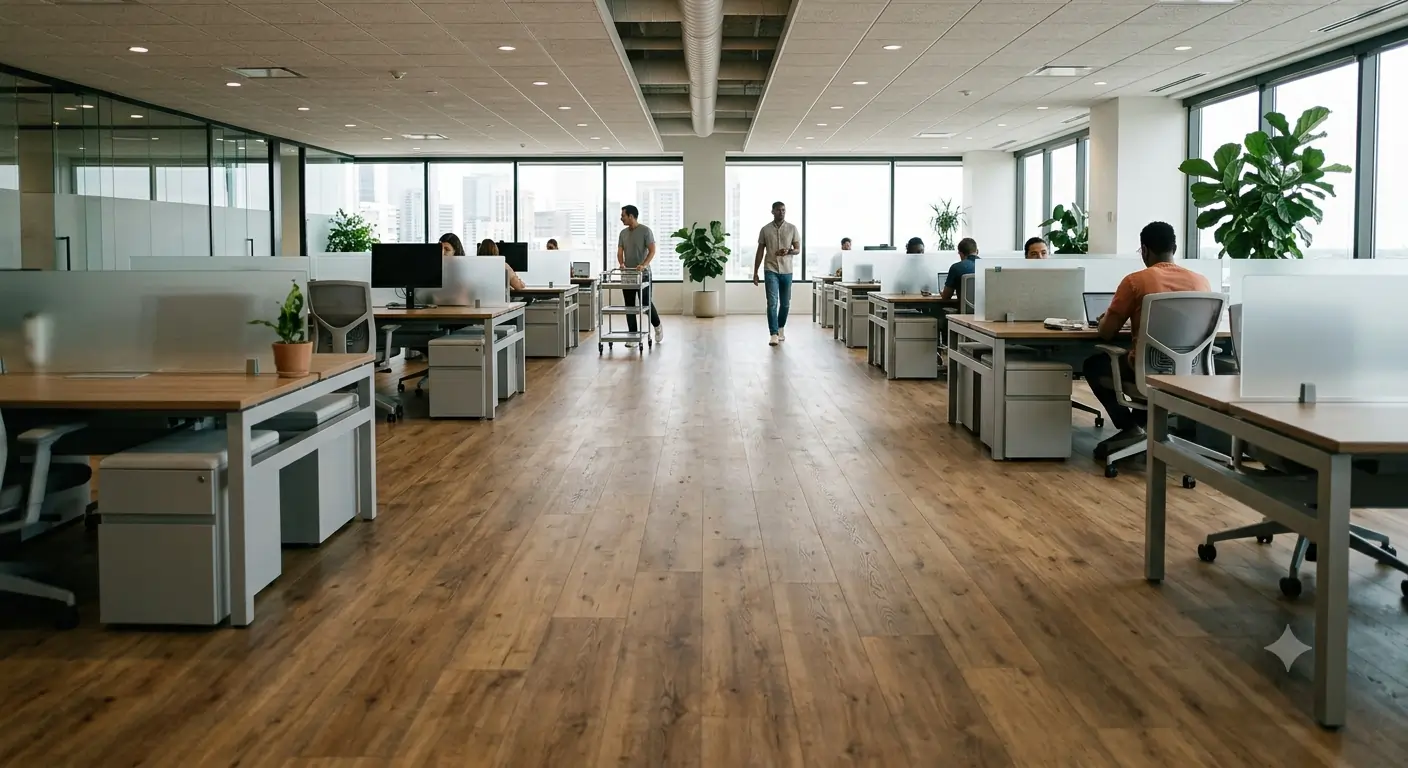
A typical office floor in Doha carries wheeled chairs, foot traffic, and dragged furniture for eight or more hours a day, year after year, without a proper rest. Laminate flooring for office spaces is built with exactly that kind of daily wear in mind. It’s a layered product: a dense particleboard core, a printed design layer underneath, and a clear protective top coat fused together under heat and pressure.
What Commercial Laminate Flooring Is Actually Made Of?
That layered build is what separates laminate from a simple wood veneer. The core gives it rigidity underfoot. The printed layer supplies the look, whether that’s a pale oak finish or a darker walnut tone. The wear layer on top resists surface scratches and everyday stains, which matters in a space where chair casters and courier trolleys roll through daily. Commercial laminate flooring has become common in offices partly because it copies the appearance of natural wood or stone without the same sensitivity to the region’s heat and dust.
Anam Trading & Contracting supplies laminate parquet flooring built on this same layered structure, offered in both traditional and more contemporary finishes for homes, offices, and apartments across Qatar.
Benefits Worth Weighing for an Office Fit-Out
Cost is usually the first thing that comes up in a fit-out conversation, and laminate tends to land well below solid wood or natural stone while still giving a similar visual result. Installation is also relatively quick compared to tile work, which matters if a business can’t afford to shut a floor down for weeks. Beyond budget, there’s a genuine design range here. Offices that want a warmer, less clinical look than carpet tile or vinyl often lean toward laminate for reception areas and private offices specifically because of that finish variety.
Maintenance is another point in its favor. A laminate floor generally needs regular sweeping and the occasional damp mop rather than specialized cleaning products or scheduled resealing.

Where Does Laminate Flooring for Office Spaces Make the Most Sense?
The best fit is dry, low-moisture zones with moderate to steady foot traffic. Think private offices, meeting rooms, reception lobbies, and open-plan work areas away from pantries or washrooms. In these spots, laminate holds up well and gives a more polished feel than basic vinyl sheet flooring, without the cost of engineered hardwood.
It’s a weaker match for server rooms, kitchenettes, or any area where spills are routine, since sustained moisture at the seams can cause the core to swell over time. Heavy industrial zones with forklifts or repeated point loads also tend to outlast laminate’s practical lifespan faster than a lighter-traffic office floor would.
Drawbacks to Weigh Before You Commit
Laminate can’t be sanded and refinished the way solid hardwood can. Once the wear layer is damaged in one spot, that plank usually needs replacing rather than repairing. Sound is another factor: without proper underlayment, laminate in a large open office can produce a hollow echo under footsteps and rolling chairs, though this is manageable with the right acoustic underlay at installation. Water exposure remains the main long-term risk, so office managers should factor in door mats near entrances and quick cleanup protocols for any spills near workstations.
None of these drawbacks rule laminate out. They just mean the choice depends heavily on which rooms it’s going into and how the space actually gets used day to day.
Final Thoughts
Laminate flooring for office spaces works best when it’s matched to the right rooms rather than applied uniformly across an entire floor plan. Dry, moderate-traffic areas get the most value from it, while wet zones are better served by something else entirely. Anyone planning an office renovation in Doha can compare laminate against other options directly with a supplier who carries multiple flooring types side by side. Which rooms in your office layout would benefit most from a warmer floor finish?
FAQ
A private office with light foot traffic is the sweet spot for laminate flooring. Add rolling chairs and a steady walk-through in a reception area, and the wear layer still holds up for years. Push it into a warehouse zone with forklifts, though, and it wears down far faster than the rest of the floor would suggest.
Not reliably over the long term. Standing water can seep into the seams and cause the core to swell. If a room sees regular spills, vinyl or SPC flooring generally holds up better in that specific spot.
Sweeping a couple of times a week plus a lightly damp mop covers most of it. Steam cleaners and soaked mops are the two things to skip, since standing moisture works its way into the seams over time. Harsh degreasers aren’t great either, they dull the wear layer faster than normal traffic ever would.
It depends heavily on traffic levels and maintenance, so there’s no single fixed number that applies everywhere. Dry, moderate-traffic rooms tend to get considerably more life out of it than damp or heavily loaded areas.
Laminate uses a wood-based core and mimics natural wood closely, while SPC is a stone-plastic composite that’s fully waterproof. Offices with damp-prone areas often mix both, using SPC where moisture is a concern and laminate elsewhere.