
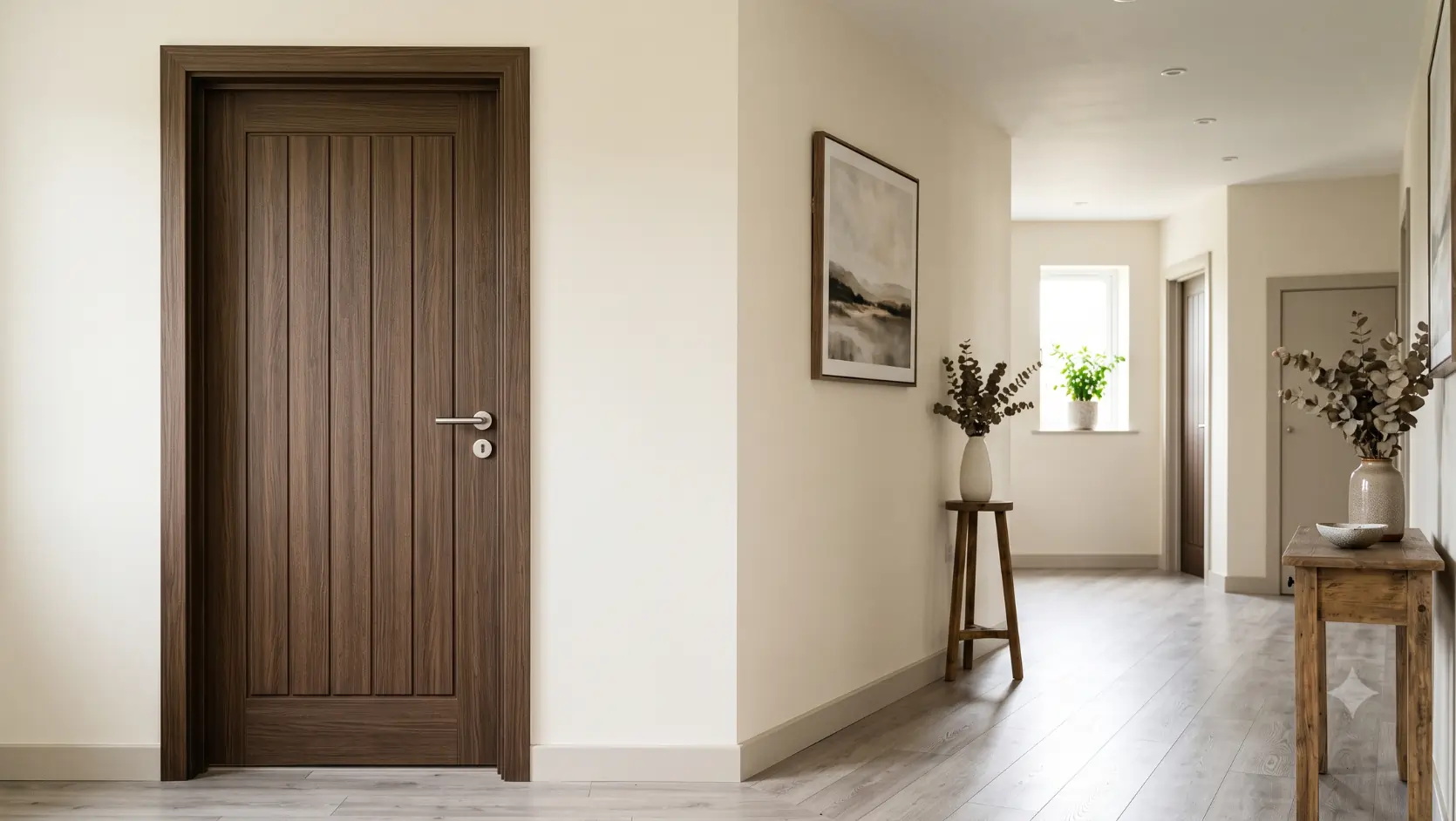
Homeowners weighing WPC doors vs wooden doors in Qatar usually land on the same question: which material holds up without constant upkeep? The answer has less to do with price and more to do with where the door sits, how much moisture it faces daily, and how much maintenance you want to sign up for.
What Makes WPC Doors Moisture Resistant?
WPC stands for wood plastic composite, a mix of wood fiber, plastic, usually PVC, and additives pressed into a door panel. The WPC door range is built specifically to resist warping, fading, and cracking, which matters in a climate where indoor humidity swings sharply between the AC-dry winter months and the coastal humidity of summer. The doors are fully waterproof, so they hold up in bathrooms, kitchens, and other moisture-prone rooms without absorbing water at the edges.
Day to day, that translates into less work. There’s no sanding, staining, or repainting required. A damp cloth handles most cleaning. Pest resistance is also part of the appeal. Termites and other wood-boring insects have nothing to feed on in a WPC panel, since the material carries no natural cellulose for them to target. For anyone searching for moisture-resistant doors that Qatar suppliers stock in bulk, WPC is usually the category they land on first.
Design range has also caught up in recent years. Anam’s WPC lineup comes in a variety of wood-textured finishes and panel styles, so the doors read as timber from a distance while performing very differently in high-moisture conditions. That makes them a practical fit for bathrooms and main entrances alike, without the visual compromise that older composite materials used to carry.
Why Do Wooden Doors Still Hold Their Place?
Solid wood hasn’t lost its appeal, and for good reason. The wooden door range includes teak, oak, mahogany, and pine, each with a different balance of durability, grain pattern, and price. Teak in particular resists pests and lasts for decades when properly sealed. Mahogany and oak are common choices for door frames that need to carry weight without sagging over time.
The tradeoff is that wood is a hygroscopic material. It absorbs and releases moisture depending on the relative humidity around it, and that exchange causes it to expand or contract. The U.S. Forest Service’s Forest Products Laboratory has documented this swelling and shrinking behavior in detail, noting that shrinkage varies by species and tends to run higher in denser woods. In practical terms, a wooden door left unsealed or installed without a proper finish can swell during humid stretches and shrink when the AC runs constantly, which is exactly the cycle Doha interiors go through each year. Regular sealing, and choosing a stable core like engineered wood for interior doors, keeps this in check.
Design is where wood pulls ahead. Panel doors, flush doors, and carved detailing are all easier to achieve in solid timber than in composite panels, and buyers who want a villa entrance with a distinct, handcrafted look usually end up here regardless of the upkeep involved.
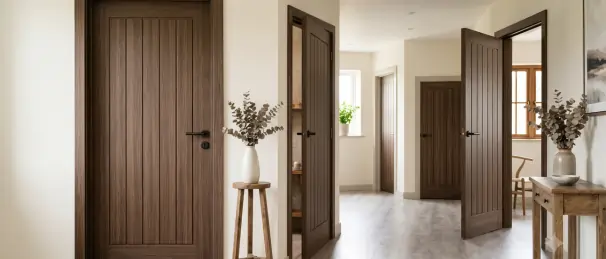
WPC Doors vs Wooden Doors: Maintenance, Cost, and Lifespan
WPC doors ask very little of the homeowner once installed. No polishing, no repainting, no seasonal touch-ups. Wooden doors need more attention: periodic sealing, occasional refinishing if scratches or fading show up, and closer monitoring in bathrooms or entryways exposed to weather. That said, wood offers a design range that composite panels haven’t fully matched yet, particularly for carved detailing, moldings, or a natural grain finish that some buyers specifically want in a majlis or main entrance.
Cost tends to track with these differences. Interior door materials made from WPC are generally priced to compete with mid-range wood options, while premium solid teak or engineered oak sits higher depending on size and customization. Anam Trading and Contracting’s WPC doors page and wooden doors page both list the specific finishes and panel styles available, which is worth a look before comparing quotes.
Matching the Door to the Room
The material question often comes down to the room rather than the whole house. Bathrooms, laundry areas, and kitchens benefit from WPC’s waterproof, termite-resistant door profile since those spaces see the most humidity and splash exposure. Bedrooms, studies, and main entrances are where wooden doors tend to shine, especially if the household values a natural finish and is willing to keep up with sealing every few years. Plenty of Doha homes mix both, using WPC in wet zones and wood everywhere else.
Final Thoughts
Neither material is a universal answer. Weighing WPC doors vs wooden doors room by room, rather than picking one for the whole house, is usually what settles the decision. WPC suits low-maintenance, moisture-heavy spaces, while solid wood rewards the extra care with a look composite can’t quite replicate. Looking at samples from Anam Trading and Contracting’s showroom in Doha, side by side, in the room they’re going into, tends to settle the question faster than any spec sheet. Which rooms in your home are you replacing doors in first?
FAQ
Genuinely waterproof. The wood plastic composite core doesn’t absorb moisture the way solid timber does, so it won’t swell at the edges even in a bathroom that sees daily steam. That’s different from a sealed wooden door, which resists water only as long as the finish stays intact.
Not every year, but check the finish every year regardless. Most sealants hold up for two to three years before humidity and AC cycling start to show through as small cracks or dullness. Coastal villas with higher indoor humidity may need touch-ups sooner than inland apartments.
No, and that’s one of the clearer advantages. Termites feed on natural wood fiber, and WPC panels don’t offer enough of that to sustain an infestation. Wooden doors, especially untreated ones, remain a target if termite activity is present anywhere nearby in the building.
WPC usually comes out ahead once you factor in avoiding resealing, repainting, and repair costs. A solid teak door might cost more initially and again after a few years of upkeep, while a WPC door mostly just needs wiping down. Budget-wise, it depends on how many doors are in the comparison.
Yes, and it’s actually a common approach. Many homes use WPC in bathrooms and utility spaces where moisture is constant, then keep wooden doors for bedrooms, main entrances, or any area where the grain and warmth of real wood matter more than low maintenance.