
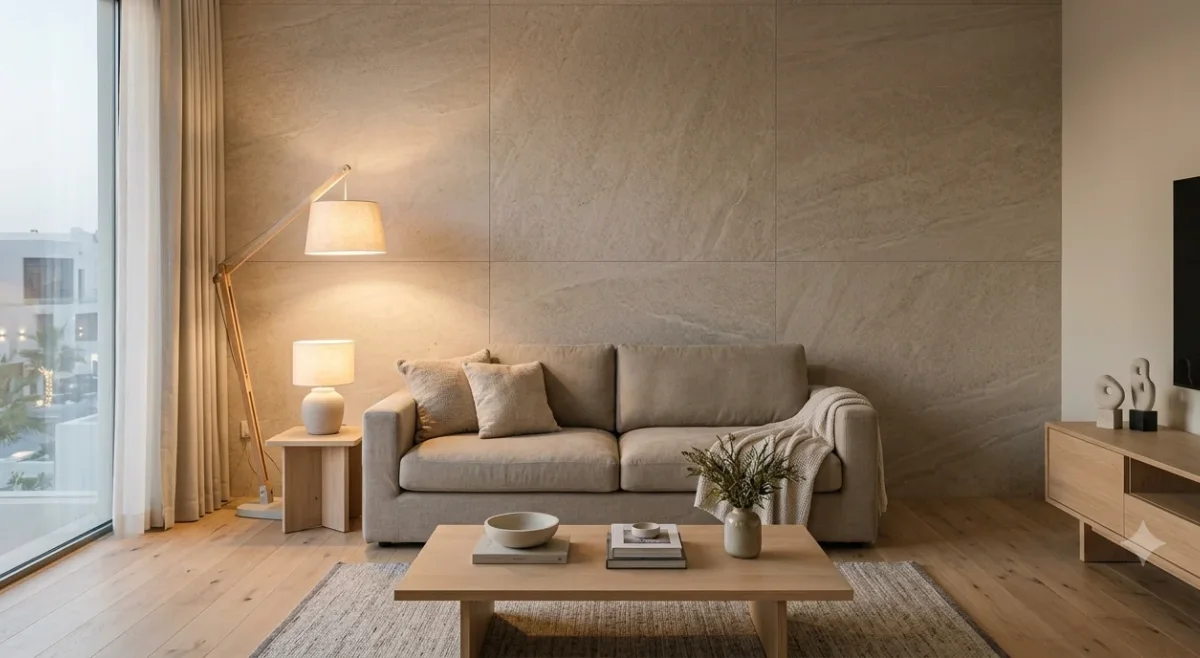
A panel that looks right in a showroom can look wrong on a narrow bathroom wall at six in the evening. Room size, neighbouring finishes and light all change the result. This guide helps you choose tile effect wall panels by working through five decisions: pattern, colour, finish, room use and balance. Short answer: settle what the room demands first, then let the pattern and colour follow from what already sits around the wall.
Choosing Tile Effect Wall Panels for Small and Large Rooms
Pattern scale changes with floor area. Panels come in different designs and sizes, and the size decides how many joints a wall shows. In a compact bathroom or entrance, calmer patterns and fewer visible seams keep the wall from feeling crowded. A large living room or open office can carry a bolder pattern, a wood-look run, or one dramatic wall.
Consider repetition as well. Wooden wall panels are built to read as real timber, so check how the grain repeats on a sample before picturing it across a whole wall. An interface plug system joins the panels during fitting, which makes the seam part of the design. Ask to see it up close.
Colour Coordination With Flooring, Furniture and Cabinetry
Walls rarely work alone. Bring a floor sample, whether SPC, laminate parquet or porcelain tile, plus a cabinet door sample and a scrap of fabric from the main furniture. Lay them against the panel in daylight, then again under evening lamps. When you compare tile effect wall panels with that group, check that the undertones agree, not just the colour names.
Kitchens give a clear case. Kitchen panels come in several colours, white included, and can sit where regular tiles would on walls, wardrobes and countertops. Match them to the cabinet doors first, then to the floor.
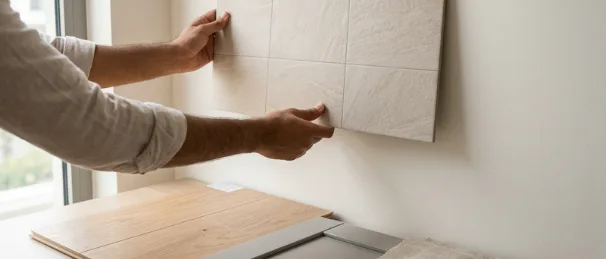
Finish Selection: Glossy, Matte or Textured
Be careful here, because the product details don’t spell out sheen grades. They do describe an embossed, coated metal sheet with a relief sculpture surface, plus a UV protection top coat meant to hold the lustre. Textured is clearly on the table. Glossy and matte versions need confirmation with the supplier, sample by sample.
A practical rule helps. Gloss tends to show wipe marks and fingerprints on low walls, while texture hides some of that but can hold dust in the grooves. PVC panels, for instance, keep their shiny look with an occasional dust wipe. Judge the finish in the light it will actually live in, especially on a sunny wall.
Room-Specific Styling: Bathrooms, Kitchens and Living Rooms
Bathrooms favour PVC panels. Made from polyvinyl chloride, they resist water and are described as free of the mould trouble damp walls cause. Kitchens suit panels made for stains and water, which clean with a simple swipe. Living rooms allow more freedom: wooden panels give a timber look, and acoustic panels absorb sound waves to cut echo in a hard, empty room.
Whatever the room, treat performance claims as questions. The details list heat insulation, sound insulation and a polyurethane foam core treated with flame retardants. Ask for written specifications and test documents, then check them against Qatar’s civil defence and building requirements. Heat insulation claims are worth comparing with local efficiency guidance too.
Visual Balance: Feature Walls and Existing Finishes
A feature wall works when one surface leads and the rest support it. If the floor already carries a strong grain, choose a quieter panel. If curtains, blinds or wooden doors already add pattern, keep the panel simple. Put the panel wall where the eye lands first, usually opposite the entrance or behind the main seating, and stop it at a clean corner so the edge looks planned. A sample propped against the real wall for a few days beats any catalogue photo.
Final Thoughts
Pattern follows room size, colour follows the neighbours, finish follows the light, and the room’s job comes before all three. Panels suit homes, offices, retail spaces and hotels, so request written specifications and have a qualified contractor check the wall surface, moisture and fixing method. This article is general information, not professional advice, and it draws on product details published by Anam Trading & Contracting in Doha. Which wall in your home is asking for a feature, and what already stands next to it?
FAQ
Ask the supplier, because the product details don’t list sheen grades. They do mention a textured relief surface and a UV top coat meant to hold lustre. Check each sample in the room’s own light before deciding.
Hold a floor sample, such as SPC or laminate parquet, against the panel in daylight and lamp light. Compare undertones, not just names. Bring cabinet and furniture samples along too, so everything gets judged together.
Quieter patterns with fewer visible joints, since panel size decides how many seams show. Look at a sample up close before ordering, especially where the plug-in joints will fall.
Yes. Kitchen panels resist stains and water, clean with a swipe, and come in several colours, white included. Get written fire and moisture specifications and have a licensed contractor check the wall before fitting.