
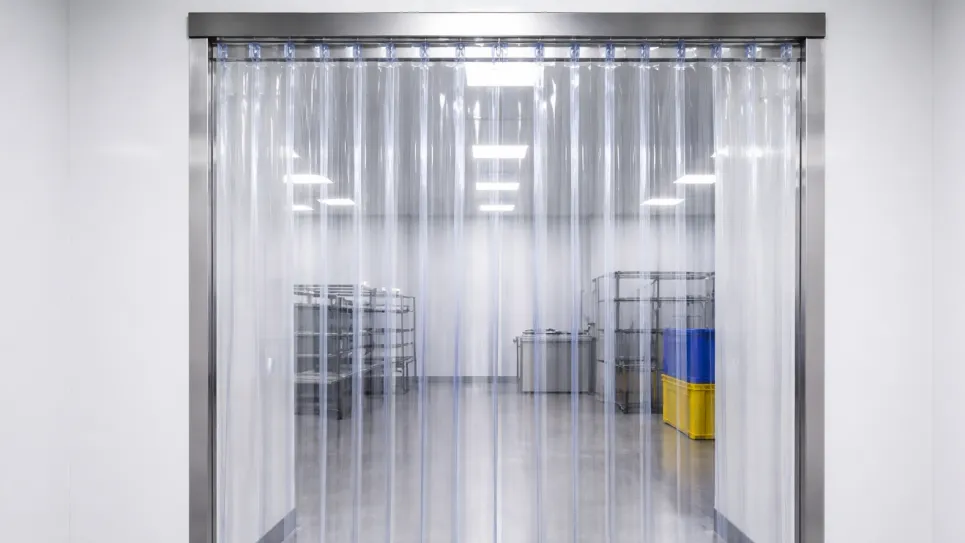
Keeping a warehouse or a commercial kitchen cool in Qatar isn’t just a comfort issue; it’s a financial one. When your AC works overtime to fight the 45°C heat while your doors stay open, you’re essentially paying to cool the entire desert. The struggle is real. You need traffic to flow, but every second a door is open, your expensive conditioned air vanishes. Whether you’re managing a food prep zone or a logistics hub, here is how to prevent cold air from escaping in warehouses or kitchens without slowing down your team.
| No | Table of Contents |
|---|---|
| 1 | The Invisible Wall: PVC Strip Curtains |
| 2 | Temperature Zoning for Better Efficiency |
| 3 | Maintain Your Door Seals |
| 4 | Use High-Volume Air Movement |
| 5 | Final Thoughts |
| 6 | FAQ |
The Invisible Wall: PVC Strip Curtains
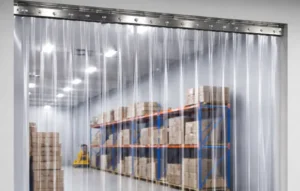
The most effective way to trap cold air is to create a physical barrier that doesn’t act like a wall. PVC strip curtains are the gold standard for this. They consist of overlapping clear strips that allow people, pallets, and forklifts to pass through instantly, then snap back into place to seal the opening.
At Anam Trading & Contracting, we see these as the first line of defence. By installing high-quality PVC strip curtains, you can reduce energy loss by up to 40%. They act as a thermal shield, keeping the frost in the freezer and the humidity in the street.
Temperature Zoning for Better Efficiency
You shouldn’t treat your entire facility like one big box. In large warehouses, “zoning” is your best friend. This means using partitions to isolate high-traffic loading docks from the core storage areas.
By creating these smaller climate zones, your HVAC system doesn’t have to struggle to cool the area right next to an open bay door. It’s a simple logical shift that saves thousands in utility bills over the summer months.
Maintain Your Door Seals
It sounds basic, but a worn-out rubber seal on a walk-in freezer is a silent profit killer. Even a tiny gap allows a constant “bleed” of cold air.
Check your doors weekly. If you see light through the cracks or feel a draft, it’s time for a replacement. Combine tight seals with an automated door solution to ensure that “human error” (leaving the door propped open) doesn’t ruin your inventory.
Use High-Volume Air Movement
In kitchens, heat from ovens often pushes cold air out of the room. Using specialized fans to create a “pressure” balance helps keep the cool air where it belongs.
When you pair this with strip curtains, you’re creating a multi-layered defence. The curtains handle the physical exchange, while the airflow management ensures the hot kitchen air stays away from your cold storage entrances.
Final Thoughts
In the Qatar heat, air is a commodity. Letting it escape is like leaving a tap running 24/7. By investing in simple, passive solutions like strip curtains and better zoning, you protect your equipment from burnout and your business from skyrocketing costs.
FAQ
Absolutely. In fact, they work better when the temperature difference is extreme. They prevent the “rush” of hot air that happens the moment a solid door opens. It keeps the internal temperature stable so your AC doesn’t have to “spike” to keep up.
Not if you get the right type. For heavy traffic, we use “ribbed” or “buffer” strips. These are designed to take a beating from forklifts and pallet jacks without scratching or tearing, and they move out of the way effortlessly.
Kitchens get greasy; it’s just the way it is. The beauty of PVC is that it’s non-porous. A simple wipe-down with warm soapy water once a week keeps them clear and hygienic. If a single strip gets ruined, you can replace just that one instead of the whole door.
Yes. In Qatar, dust and pests are huge issues. These curtains act as a 24/7 barrier against sand, flies, and birds, which is a massive win for food safety compliance in commercial kitchens.