
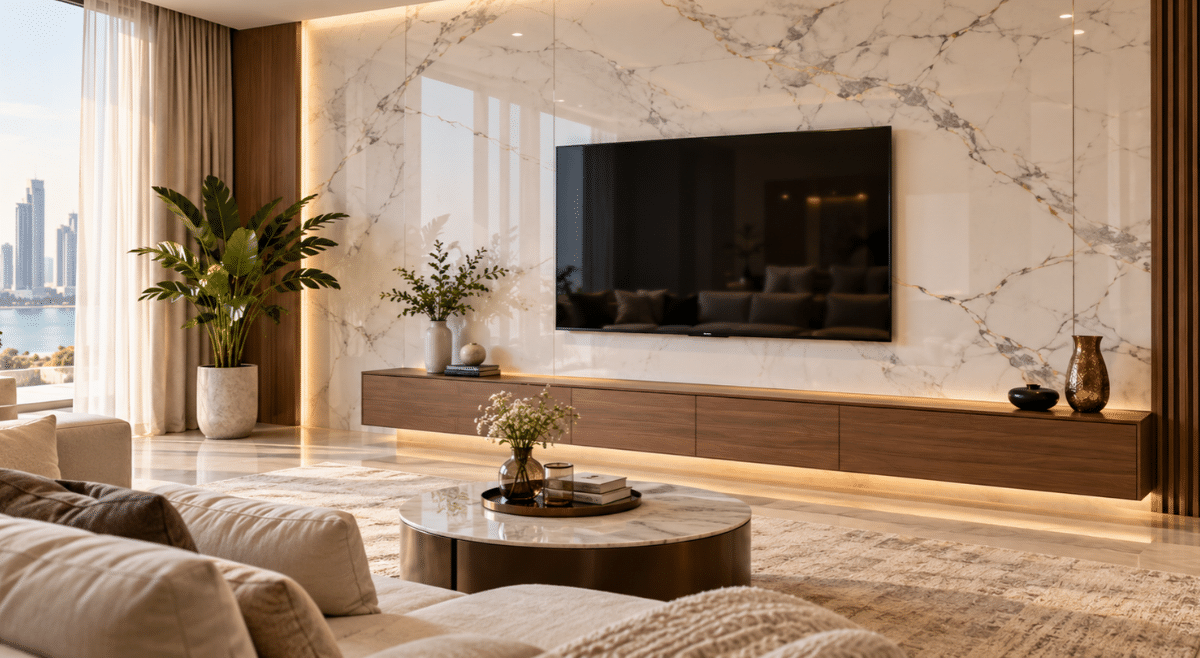
A single panel measures 1220 mm by 2440 mm, and that fixed face size shapes most wall plans before anyone looks at a pattern. Picking a UV marble sheet design for a TV wall or a reception counter comes down to five checks: pattern, thickness, finish, fitting method and written proof for any safety claim. This guide goes through each one using the specifications listed for PVC marble sheets, so you can walk into a sample discussion with clear questions.
Quick Answer: For a TV wall, lean towards a calm classic pattern that will not compete with the screen. For reception, choose a pattern that reads clearly from a distance. Confirm thickness with your installer, and ask for test reports before relying on any fire or moisture claim.
What Is a PVC Marble Sheet Made Of?
Shops use several names for one product family. PVC marble sheet, UV marble panels and SPC marble panels all appear in listings. The listed composition is PVC, calcium carbonate powder and additives, topped with a UV coated high-gloss surface.
The aim is to borrow the look of natural marble without the cost or upkeep of real stone. These sheets are listed for indoor walls only, so exterior cladding is off the table.
Choosing a Pattern for a TV Backdrop
TV backdrops are one of the named uses, next to accent walls, hallways, pillars, false ceilings and partitions. Listed designs fall into four groups: classic marble patterns, glossy white with black veins, onyx-inspired shades, and contemporary designs with gold or blue accents.
A TV wall already pulls the eye to one spot. Heavy veining right behind the screen can fight with the picture, so a calmer, classic pattern tends to frame a TV more gently. A bold onyx shade or a gold accent suits a wall that carries little else. Judge any UV marble sheet design for this spot by sitting where you normally sit and looking at a sample.
Gloss matters too. The surface is high-gloss, so it reflects light. Check a sample under the room’s real lighting, with the TV on and then off.
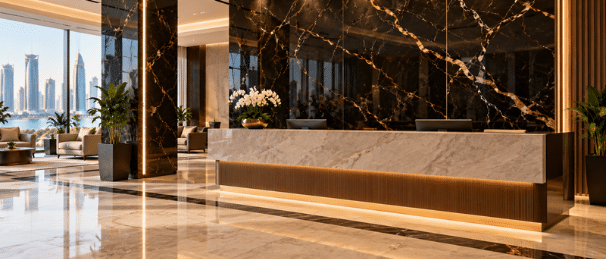
Planning a Reception Wall
Offices, hotels, lobbies and shopping malls are named among the commercial uses. A reception wall gets read in seconds, so one clear pattern often works better than a busy mix. Listings describe the UV coating as scratch resistant and the surface as easy to wipe, which counts near a desk where bags, trolleys and hands pass all day.
The same sheets are listed for pillars, columns and partitions. A wall behind the desk can link visually with those.
UV Marble Sheet Design Checks Before You Order
Start by measuring your wall against the 1220 mm by 2440 mm face. Fewer joins usually mean fewer visible lines.
Then think about delivery. Sheets can be packed on pallets or in bulk, which suits a hotel or mall fit-out more than a single living room.
Last, ask for a cut sample at your chosen thickness and look at the edge, not only the face.
Fire and Moisture Claims Need Paperwork
The listing describes the sheets as waterproof and fireproof and calls them safe for interior use. That is a seller’s description, not a certificate. Fire performance matters most in public buildings such as hotels and malls, so request written test reports for both claims and check them against the building and fire safety rules that apply to your property.
A qualified installer or fire safety consultant can confirm what is acceptable before any work starts.
Everyday Care
The only upkeep step listed is wiping. For a reception wall, also ask which cleaning products suit the UV coating, since that coating gives the surface its shine and scratch resistance.
Questions to Ask Your Supplier
- ● Which thickness suits my wall?
- ● Can I see a sample under my own lighting?
- ● Do written fire and moisture test reports exist?
- ● Should the sheets be fixed with adhesive or a frame?
- ● How will my quantity be packed and delivered?
Final Thoughts
Choosing a sheet comes down to a few checks: the thickness the wall can take, a pattern that suits the room, a finish that behaves under your lighting, and documents behind every safety claim. The sizes, finishes and fitting methods in this guide come from the listing of Anam Trading & Contracting, a Doha supplier. Which wall would you cover first, and what should people notice when they walk in?
FAQ
Mostly PVC, mixed with calcium carbonate powder and a few additives, then topped with a UV-coated high-gloss surface. Listings also call it a PVC marble sheet, UV marble panel or SPC marble panel. Different labels, same product family. It is meant for indoor walls, not outdoor use.
Yes, TV backdrops are among the listed uses, along with accent walls, hallways, pillars and partitions. Before anything goes behind a mounted screen, have an installer look at the wall and say whether adhesive or a frame suits it. Pick a calmer pattern so the picture stays the star.
Hotels and lobbies are on the listed uses, and the listing calls the sheets fireproof and safe for interior applications. Still, that comes from the seller. Ask for written fire test reports and check them against local fire safety rules, or ask a qualified consultant before you commit.
Anywhere from 1.3 mm to 6.0 mm on a 1220 mm by 2440 mm face. There is no single right number, so let your installer check the wall and suggest one. Then ask for a sample at that thickness so you can see and feel it first.
The listing says wiping is enough for day-to-day upkeep. A UV coating gives the surface its shine and scratch resistance, so ask your supplier which cleaning products are safe before reaching for strong chemicals. That small question protects the finish, especially on a wall people pass every day.