
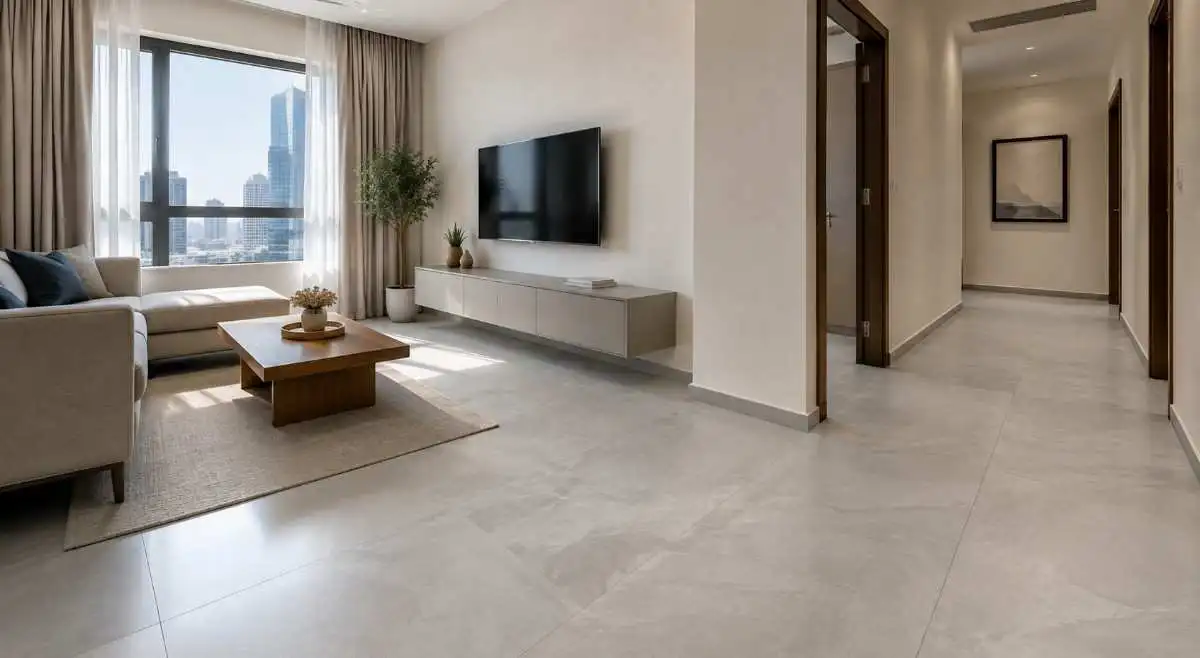
A tight room can trick the eye into feeling roomier than its actual footprint, and most people never guess that the trick is hiding under their feet. If your apartment in Doha or your compact home office keeps feeling boxed in, the fix usually is not knocking down a wall. It starts with smarter flooring design ideas and using them the right way. This guide walks through what genuinely works in small rooms, what tends to backfire, and how the material underfoot changes the whole read of a space.
Why Do Small Rooms Need a Different Flooring Strategy?
Big rooms can absorb bold patterns and mismatched materials without losing their sense of scale. Small rooms cannot. Every grout line, every color break, every transition strip becomes a small stop sign for the eye, and a room that’s already tight ends up looking chopped into pieces. Fewer breaks. Longer sightlines. A floor that reads as one surface instead of a patchwork of decisions made room by room.
The Optical Trick of Continuous Flooring
Carry the same material from a living room straight into the hallway or kitchen, and something interesting happens. The visual seam that usually says “this room ends here” disappears, so the eye keeps traveling, and the brain reads the space as larger than the tape measure says it is. Anam Trading’s flooring range covers exactly this kind of continuity project, from SPC through to laminate parquet, which makes it easier to match one material across connecting rooms instead of stitching together different products room by room.
Flooring Design Ideas Worth Trying in Compact Rooms
Once the floor runs continuously, the material choice itself starts doing the heavy lifting. A few patterns show up again and again in small-space renovations, not because they’re trendy, but because they solve the scale problem directly.
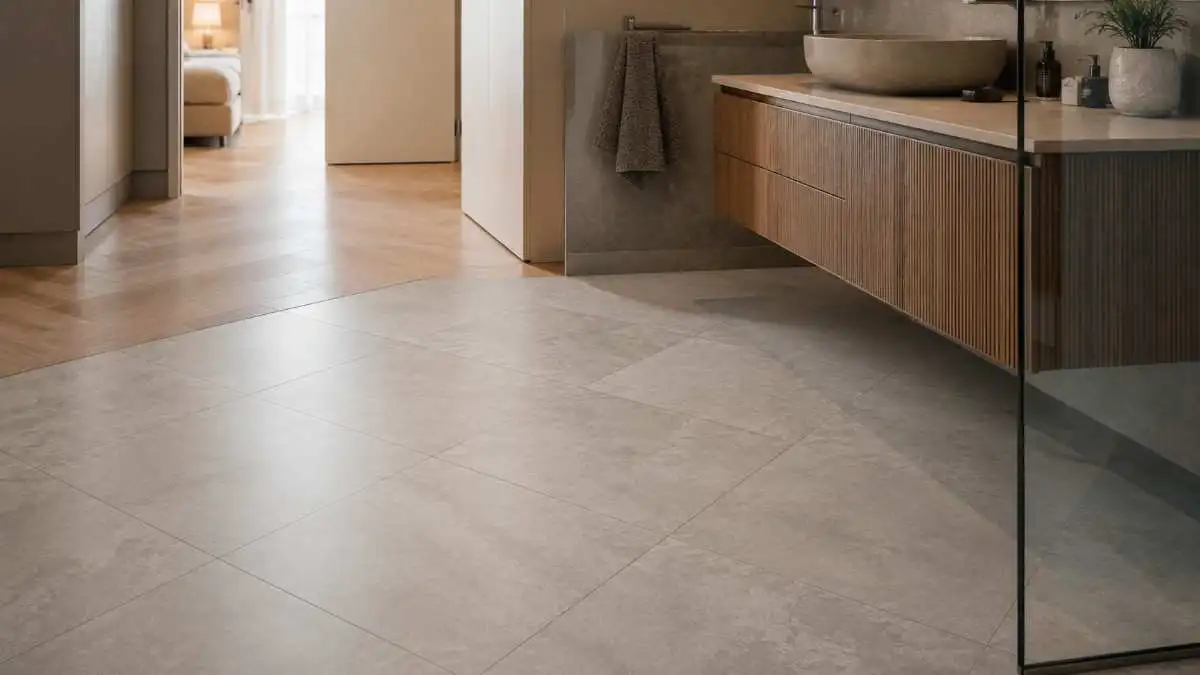
Large tiles beat small ones here, and it surprises most people the first time they hear it. Fewer grout lines mean fewer visual interruptions, so a floor laid in sixty by sixty centimetre porcelain or GVT tiles reads as close to a single sheet, especially compared with the small mosaic tiles that used to be standard in Gulf bathrooms. Architectural Digest has covered this shift towards oversized formats in detail if you want the design reasoning behind it.
Color does a similar job, just through light instead of geometry. Pale tones such as soft grey, sand, or warm white bounce whatever light is available around the room. Dark floors look sharp in a large open-plan space, but in a small bedroom or box room they tend to pull the eye downward and make the walls feel closer than they actually are. Laminate parquet in a light oak tone provides you warmth without that visual weight, which is why it turns up so often in compact apartment renovations.
Then there’s the angle of the lay itself. Running planks or tiles at forty-five degrees instead of straight across the room stretches the eye along the longest possible line in the space, which pulls the perceived width outward. It costs a bit more in material during installation because of the extra cutting involved.
Materials That Hold Up in Qatar’s Climate
Looks aside, humidity and heat do real work on a floor over time, and that matters even more in a small room that takes concentrated foot traffic every day. SPC, short for Stone Plastic Composite, is built from a blend of limestone and stabilizers, which gives it water resistance that holds up in kitchens, bathrooms, and entryways where moisture shows up constantly. It stays dimensionally stable under the kind of heat and humidity swings that are routine in the Gulf, rather than warping the way some laminate products can.
Vinyl and PVC flooring sit at a lower price point but offer similar day-to-day practicality, with a seamless finish that suits anyone who rearranges furniture often since there’s no rigid seam to plan around. Carpet tiles work well in a smaller home office or bedroom where a softer underfoot feel matters more than water resistance, and because they come in individual squares, a single worn or stained tile can be swapped out without redoing the whole floor.
Getting Professional Input Before You Commit
Flooring isn’t something you casually redo once it’s down, so it’s worth working through usage, budget, and long-term wear before placing an order rather than deciding from a handful of online photos. A short consultation with someone who installs floors for a living tends to catch things a homeowner wouldn’t think to ask about, like how a particular room’s humidity or light exposure changes which material actually makes sense. Anam Trading & Contracting has been supplying and installing flooring across Doha since 2012, and their team walks through exactly this kind of consultation before recommending SPC, laminate parquet, vinyl, or tile for a specific space.
Final Thoughts
Small rooms respond to a handful of deliberate choices: one continuous material, larger tile formats, lighter tones, and a laying pattern that stretches the eye instead of chopping it up. None of it demands a full renovation budget. It just needs flooring design ideas before the flooring goes down instead of after. Which room in your home feels smaller than it should, and would swapping the floor alone be enough to fix it?
FAQ
It holds up in practice. Light floors reflect more of whatever light a room has, so the space opens up instead of closing in. Dark floors suit a big living room fine, but in a small one they pull the eye down and make the walls feel closer than they are.
For a room that deals with moisture on a daily basis, yes. SPC resists water and holds its shape when heat and humidity climb, which matters most in small, enclosed rooms where airflow is usually limited to begin with.
Keep the same flooring running from one room into the next. If the materials already match, there’s nothing new to buy, just fewer rugs and transition strips breaking up the line of sight.
Bigger, more often than not. Fewer grout lines means fewer visual breaks, so the floor reads as one surface instead of a busy grid. It sounds backward until you actually see it installed.
Budget and daily use settle it most of the time. Vinyl costs less and feels softer underfoot, while SPC is rigid and takes heavier daily traffic without showing it. A short conversation with a flooring specialist usually clears this up faster than comparing samples on your own.