
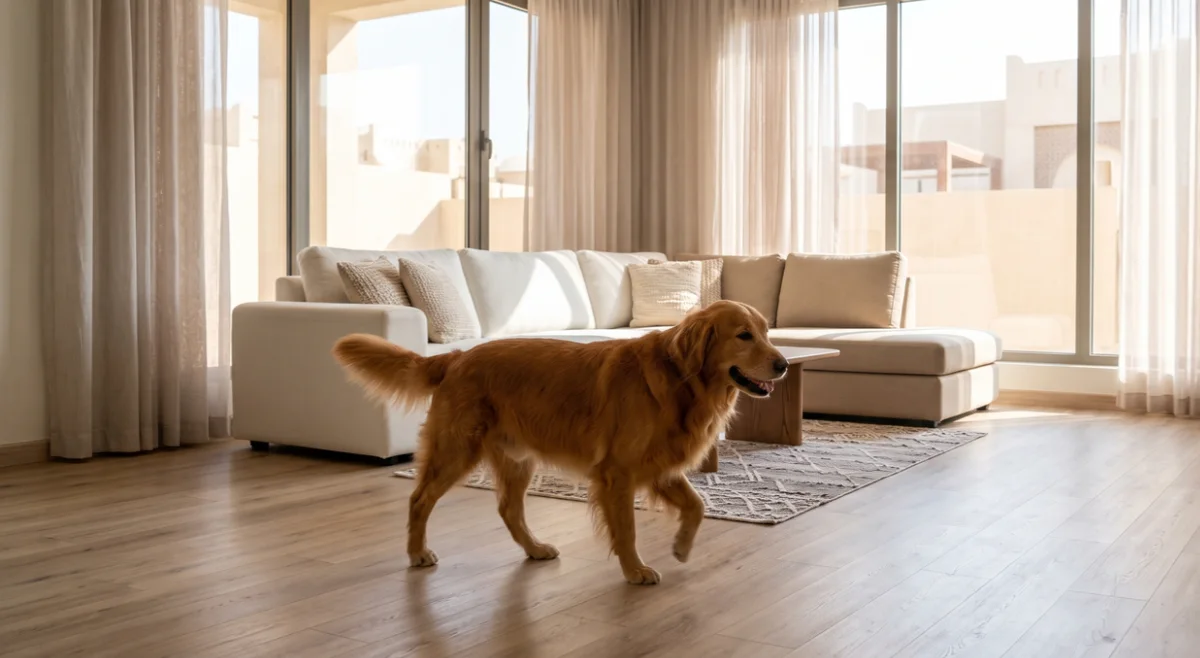
Next time your dog crosses the hallway, stop and listen. A steady tick of nails on the floor is a small clue, and it matters when you start comparing the best flooring for pets. Nails that strike first mean the soft pad underneath is not sharing the load. The dog is skating on hard tips. Here is why dogs slip, and what to check before you pick a surface.
How Floor Friction Shapes a Dog’s Paw Grip
Dog paws evolved for soil, grass, and loose gravel. Textured pads press into uneven ground, and nails dig in like small cleats. A smooth indoor surface gives them nothing to bite. A common reaction: on slick floors, many dogs press less with the pads and lean on the toenails, which grip worse than the textured pads do.
Grip comes down to friction. Floor testers express it as a coefficient of friction, the force needed to keep a sliding object moving divided by its weight. A higher number means a less slippery surface, and 0.42 wet is the usual line for level interior floors under the ANSI A326.3 method.
Those tests were built around human walking, and the Kansas State authors say the best friction value for dogs is unknown. A rating compares floors. It does not settle things for your dog.
Physical and Environmental Factors That Increase Slipping
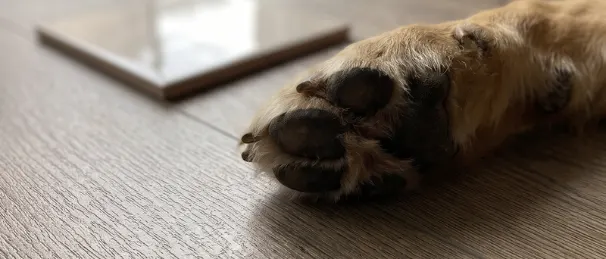
Start with the feet. Long nails hit the floor before the pad does, and the American Kennel Club notes they can splay a sound paw and reduce traction. Fur between the pads can act like a slick sock on hard floors.
Then the body. The charity PDSA explains that dogs with arthritis have weak muscles, slip easily, and struggle to rise from tiled or wooden floors, and that a slip can cause further injury. It also lists hip dysplasia among the conditions that make arthritis likely. Frequent slipping, a limp, or hesitation at the edge of a tiled room deserves a vet visit. A floor cannot treat a joint problem, and this article is general information, not veterinary advice.
The room plays a part too. Wet paws after a walk, a splash from the water bowl, dust, and cleaner residue all lower grip.
Best Flooring for Pets: What Helps Reduce Slipping
Grip depends less on a material name and more on texture, finish, cleanliness, and wear. Each floor family still has tendencies worth knowing.
Ceramic and porcelain tile split sharply. A commercial property inspectors’ association describes textured porcelain as offering good slip resistance and smooth glazed ceramic as offering little when wet.
SPC flooring is made from limestone and stabilizers and built for heavy traffic and water resistance. Toughness says little about grip, though. The Clemson study tested 22 plastic-based floors, including SPC and vinyl types, and 16 averaged below the 0.42 wet mark. Its authors stress that results apply only to the samples tested.
Laminate parquet gives a wood look with resistance to wear and marks. A matte, textured board and a glossy one will feel very different under a paw. Vinyl is flexible and softer underfoot, though its surface finish still sets the grip. Carpet tiles have a soft textured face that gives nails something to catch.
Flooring Finishes That Can Make Slipping Worse
Gloss is the usual culprit. Polish, wax, and sealers can fill the tiny pores that give a surface its bite, and years of foot traffic can polish a floor smooth. Marble and granite offer little grip when wet.
Rugs help, with a catch. PDSA suggests rugs or anti-slip mats where the dog spends most time, yet small loose rugs slide on smooth surfaces, so anything you add must lie flat and stay put.
What to Check Before Choosing Flooring for a Home with Dogs
Ask for wet test data first. Clemson found that none of the 22 products listed a wet friction value in its literature, so you may have to request it, along with the method used.
Then test a sample at home. Wet it lightly, drag your palm across it, and watch your dog walk and turn on it. Some planks grip differently along the board than across it, so turning matters as much as walking straight. Spalled legs, slow tentative steps, and scrabbling are warning signs.
Weigh the dog and the room together. Age, size, and joint health shape how much grip a dog needs, and a vet can advise on that. Where humidity runs high, as in Qatar, damp conditions are routine. Choosing the best flooring for pets means matching the surface to those conditions, not hunting for one perfect material.
Keep the grip similar from room to room, because a sudden change at a doorway catches dogs off guard.
Final Thoughts
Dogs slip when paws, floors, and bodies stop cooperating. Nails, fur, joints, finish, and moisture each add or remove a little grip, and a test sample tells you more than a brochure. Anam Trading & Contracting supplies SPC, laminate parquet, vinyl, carpet tile, ceramic, and porcelain flooring in Doha, Qatar, and the checks above apply to each. So which room does your dog cross fastest, and how does that floor feel under a damp paw?
FAQ
A rug gives nails something to catch. Paws were built for uneven ground, so on a slick floor the pad slides before the nail digs in. Gloss, moisture, or dust makes that slide worse.
Slips can strain muscles and joints, and a fall can add to an existing injury in older or arthritic dogs. The floor does not create a joint problem alone. If your dog slips often, limps, or struggles to stand, see a vet.
Yes. Long nails touch the floor before the pad does and can splay the paw, which cuts grip. Clicking on hard floors is a fair sign they need attention. A groomer or vet can show you a safe length.
Softer, textured surfaces usually feel steadier because nails can catch. Hard floors can still work when textured and kept dry, and runners help on main routes. Your vet can judge how much support your own dog needs.
Ask for the wet slip-resistance result and how it was tested. Then bring a sample home, wet it slightly, and watch your dog walk and turn on it. If it feels slick under your palm, treat that as a warning.