
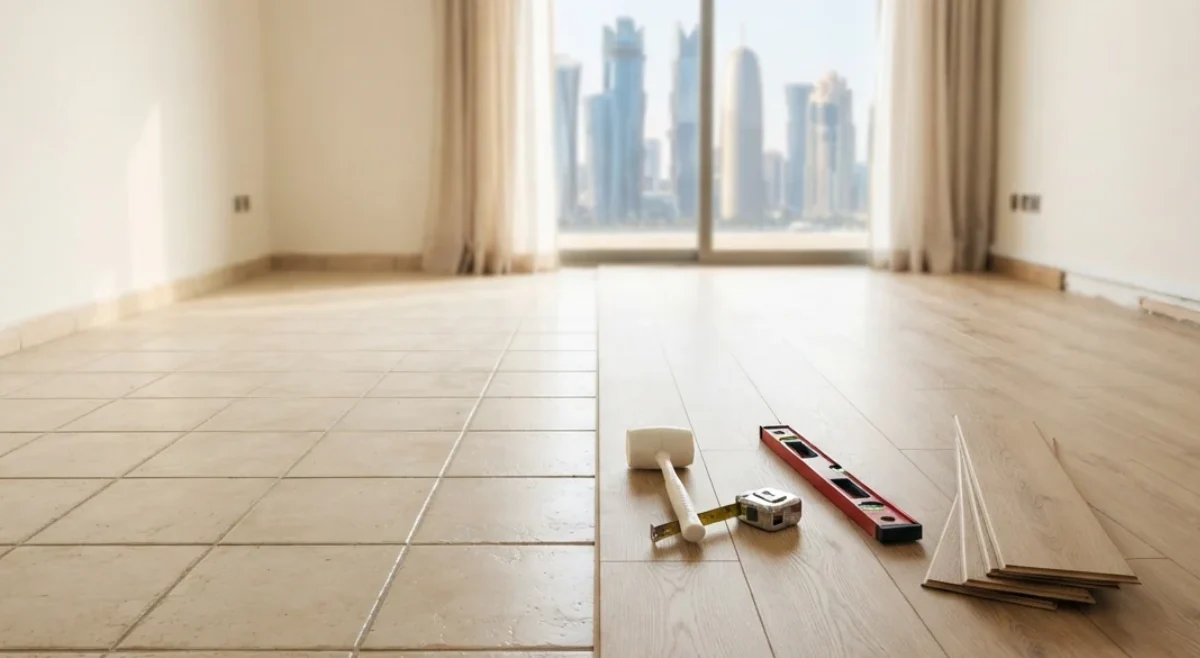
Lifting old ceramic is noisy work, and it leaves dust in every room. That is why vinyl flooring over tiles appeals to so many Doha homeowners. It can work well, but the new floor copies whatever sits beneath it, flaws included.
What follows is a plain checklist to run through before any boxes arrive. It covers the tile surface, moisture, the installation method and the small measurements people forget.
When Vinyl Flooring Over Tiles Makes Sense
Vinyl can be laid over existing subfloors such as concrete, tile, older vinyl or wood. Ceramic tile is on that list, with one condition. The surface has to be level and free from damage. Luxury vinyl planks, vinyl tiles flooring and floor sheets for room use all follow the same logic, since each one needs a steady base to rest on.
Qatar adds its own test. Heat, humidity and temperature swings are part of daily life here, and vinyl copes with them well. That only helps if the base underneath stays dry and stable.
Covering tile is not a shortcut. It trims the demolition, not the preparation.
Start With the Tile Surface
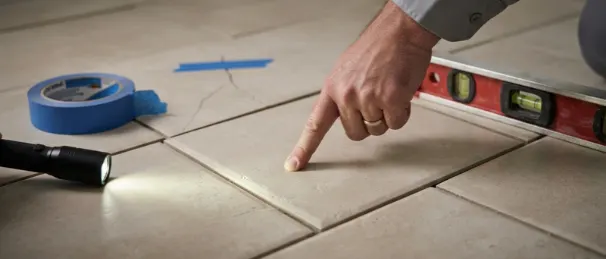
Walk each room in daylight, then again with a torch held low against the floor. You are hunting for four things.
Cracked tiles are the obvious one. Loose tiles come next, and you can find them by tapping each tile with a knuckle, because a hollow sound often means the tile has lifted from its bed. Uneven edges between neighbouring tiles matter too, since planks and thin sheets tend to show them over time. Last, look at the grout. Deep or wide joints can print through softer vinyl, so ask your installer whether they need filling first.
Mark problem spots with masking tape so nothing gets lost between inspection and repair. Damaged tiles should be repaired or replaced before anything goes on top. Dips and rises need levelling with a smoothing compound chosen to suit the vinyl you picked.
Clean, Dry and Smooth Comes First
Resilient flooring performs best on a base that is clean, dry and smooth, and standards for concrete bases say much the same.
Cleaning sounds trivial until you meet old wax, kitchen grease or a soap film on bathroom tiles. Residues like these can stop adhesive from gripping. Degrease, rinse well, then let the floor dry completely.
Dryness deserves more attention than people expect. Humid weather, a slow pipe leak or a damp slab below can leave moisture trapped under a new floor, and kitchens, bathrooms and laundry rooms are the usual suspects. If you suspect damp, get it traced and fixed before installing, and ask the installer how they test for it.
Pick the Installation Method Early
The method changes the preparation. Click-lock planks need a flat base. Peel-and-stick vinyl tile grips have their own adhesive, so a dusty or oily surface defeats it. Sheet vinyl is commonly glued down, and groutable vinyl tile is finished with grout between pieces, which brings its own prep.
Whichever style you choose, vinyl flooring over tiles asks every method the same question: is the base ready? A product label tells you how the floor goes down. Only a site visit shows whether your tile can take it.
Measure the Small Things
A new layer adds height. Even a few millimetres can catch the bottom of a door, so check clearances, then look at how the floor will meet skirting, thresholds and cabinets. Photograph the room first and note where each door swings, because a tape measure alone misses details like that. Fridges, washing machines and fixed units need a plan too. Order a little extra material for awkward cuts. Renting? Check your lease before changing any floor.
The Quick Checklist
- Tap every tile and fix loose or cracked ones.
- Level dips and raised edges.
- Review grout joints for filling.
- Degrease, rinse and dry the surface.
- Trace any sign of damp before work starts.
- Match the method to the vinyl type.
- Measure doors, skirting and thresholds for extra height.
- Read the manufacturer’s installation instructions.
Final Thoughts
Covering tile works best when the tile beneath is level, undamaged, clean and dry. Most problems that show up later trace back to a step skipped on day one. Treat the manufacturer’s instructions and your installer’s advice as the final word, since products and rooms differ. So before you choose a colour, which room will you test first? Anam Trading & Contracting shares these checks as general guidance for Doha homeowners.
FAQ
Usually, yes. Vinyl tile flooring and luxury vinyl planks can go over ceramic tile when the surface is level and free from damage. Fix cracked or loose tiles first, then ask your installer to confirm the base suits the product you picked.
Often you do. Wide or deep joints can show through thinner vinyl, so they are commonly filled or smoothed before the new floor goes down. The right fix depends on the product, and your installer can tell you once they have seen the tile in person.
Levelling comes before anything else. Dips and raised edges between tiles can telegraph through planks and sheets, so a smoothing compound suited to your product goes on first. A flat base also helps click-lock joints sit together the way they should.
Bathrooms need extra care. Floor sheet for room use is a seamless vinyl option often chosen for wet areas, but any damp in the tile bed should be fixed first. Ask your installer how moisture gets checked before work begins.