
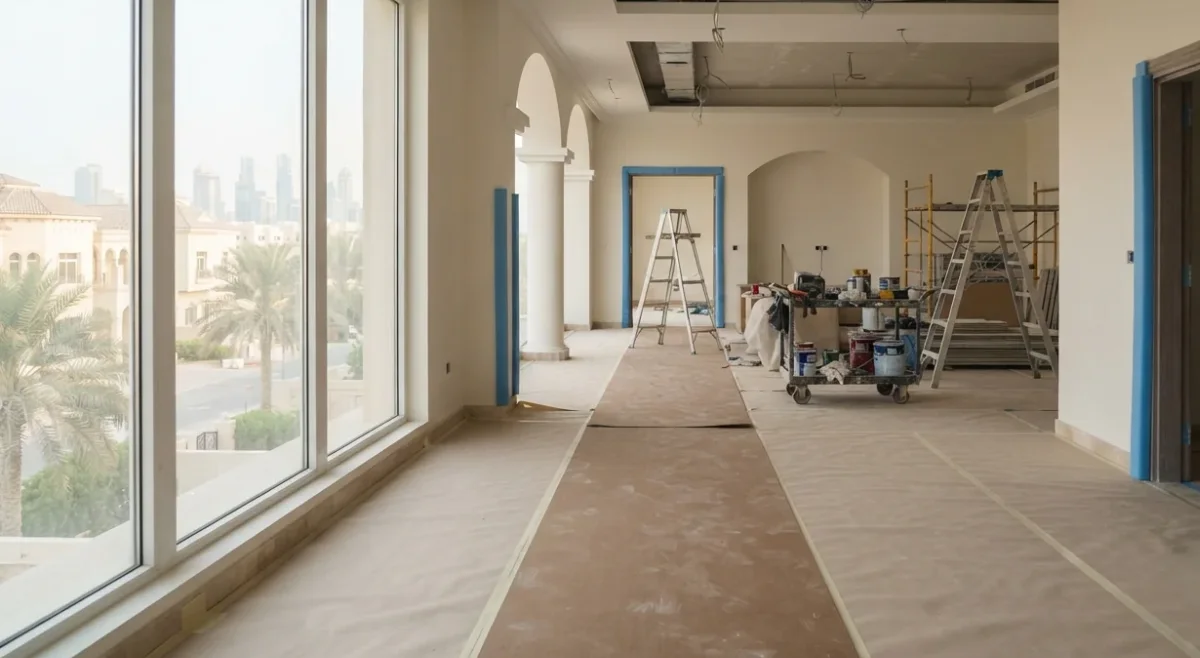
Painters, electricians, delivery crews and the people carrying the sofa all cross a new floor before its owner does. Floor protection during renovation is the plan that limits what that traffic leaves behind, and it works well only when it is written before the first pallet arrives. This guide goes through each flooring type in turn, then covers doors and walls, since those collect scrapes too.
Protecting New Flooring Starts With the Material
Floors get damaged in different ways. Hard tile chips at the edge. Soft vinyl flooring dents under a point load. Wood reacts to the air around it. One blanket answer, such as taping plastic over everything, rarely suits a whole move-in.
Doha adds its own conditions. Summers run hot and humid, and a half-finished room with the doors propped open lets that air straight onto fresh surfaces. A few habits help with every material. Sweep before covering, because grit trapped under a sheet scratches like sandpaper. Lift heavy items instead of dragging them. Wipe spills as they happen. Leave the cover down until the last messy trade has gone.
Floor Protection During Renovation, Material by Material
SPC Flooring
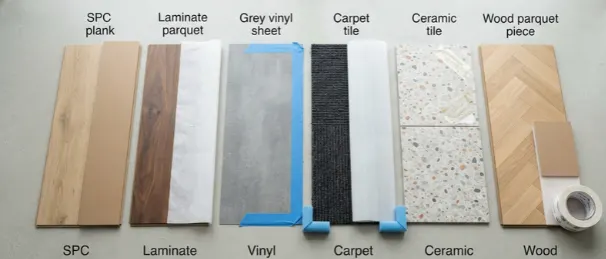
SPC, short for stone plastic composite, is a mix of limestone and stabilizers formed into a rigid, water-resistant board built for foot traffic. Damage usually comes from concentrated loads. Ladder feet, scaffold wheels and appliance trolleys can mark it. Rigid boards or thick sheets along the routes heavy items travel spread that weight, and the maker’s guidance on loads is worth checking first.
Laminate Parquet Flooring
Laminate parquet gives a wood look and is described as resistant to wear and scuffs. That helps against shoes. It does less against water sitting at the joints, which is where trouble tends to start. Wipe paint water and clean spills quickly, skip wet mopping while other trades are working, and choose a cover that lets air move rather than sealing the surface.
PVC and Vinyl Flooring
Vinyl is flexible and softer underfoot, which is much of its appeal. The same softness means a heavy leg or wheel can leave a dent. Spread loads with boards and keep sharp tools off the surface. Tape deserves care too. Strong adhesive tape pressed straight onto vinyl can leave marks, so test a hidden spot first and pick a low-tack tape made for floors.
Carpet Tiles
Carpet fibres hold onto whatever lands on them, including plaster dust and paint drips. Cover the full floor, walkways included, and vacuum before handover. Tiles have one advantage here. A single damaged square can be replaced, so keep a few spares from the delivery somewhere dry.
Ceramic and Porcelain Tiles
GVT and PGVT tiles are hard, so the risks are chipped edges and cracks from dropped tools or a loaded trolley wheel. Grout lines also soak up paint and cement dust. Lay boards over a soft layer, and let the installer say when adhesive and grout are ready for foot traffic. A tile that looks finished may not be.
Parquet and Wooden Flooring
Real wood takes on and gives off moisture with the air around it, so it moves slightly through the seasons. Sealed plastic laid directly over a fresh wood floor can trap damp air against the boards. A breathable cover or rigid board is the safer pick. Keep water-based jobs away from the floor and avoid sudden humidity swings in the room.
Doors and Walls Collect Damage Too
Steel, wooden and WPC doors, along with wood and 3D wall panels, get hurt at corners, edges and handles. Ladders, pipes and long boards swing into them when carried through a doorway. Pad corners with foam or card, cover handles, and move long items with two people. Raised 3D panel relief can catch on a trolley, so give those walls extra clearance. Wooden doors and wood panels respond to humidity much as wood floors do, so keep early deliveries flat and indoors.
Getting the Order of Work Right
Timing matters more than most people expect. Finish dusty and wet jobs such as plastering and painting first, then lay the floor and cover it straight away. Good floor protection during renovation also covers people. Close off the work area, and keep children and anyone with breathing problems out of it. Smooth plastic sheeting can be slippery underfoot, so test the grip before anyone walks across it. Written guidance from the installer and the product maker should always win over a general article like this one.
Final Thoughts
Floors, doors and walls arrive looking finished and then spend weeks absorbing site life. Matching the cover to the material is usually a small task next to repairing damage later. The material descriptions above draw on the flooring range listed by Anam Trading & Contracting in Doha. Which room in your project will see the heaviest traffic before handover, and does its cover suit what the floor is made of?
FAQ
Wait until the messiest trades have packed up, meaning painting, ceiling work and the last big deliveries. Then do one clean, lift the covers and check the floor. If tile adhesive or grout was involved, ask the installer how long to wait before anyone walks on it.
Not by itself, no. Wood takes on and gives off moisture with the air around it, so sealed plastic can trap damp air against the boards. A breathable cover or a rigid board is the safer pick, though your installer knows your particular floor better than a general guide does.
Never drag it. Vinyl is softer underfoot, so a heavy leg or wheel can leave a mark. Slide the appliance onto a board or use a trolley with soft wheels, and glance at the maker’s load guidance before moving day arrives.
Rigid SPC handles foot traffic well, but ladder feet and trolley wheels can still mark it. Sweep first, then lay thick sheets or boards where loads travel. Wipe paint spills as soon as they land, and check the maker’s advice on tapes.
Yes, because edges take the knocks. Wooden, steel and WPC doors, plus wood and 3D wall panels, scuff when long items swing past. Pad corners with foam, cover handles, and carry ladders and boards with two people so nothing swings into the frame.