
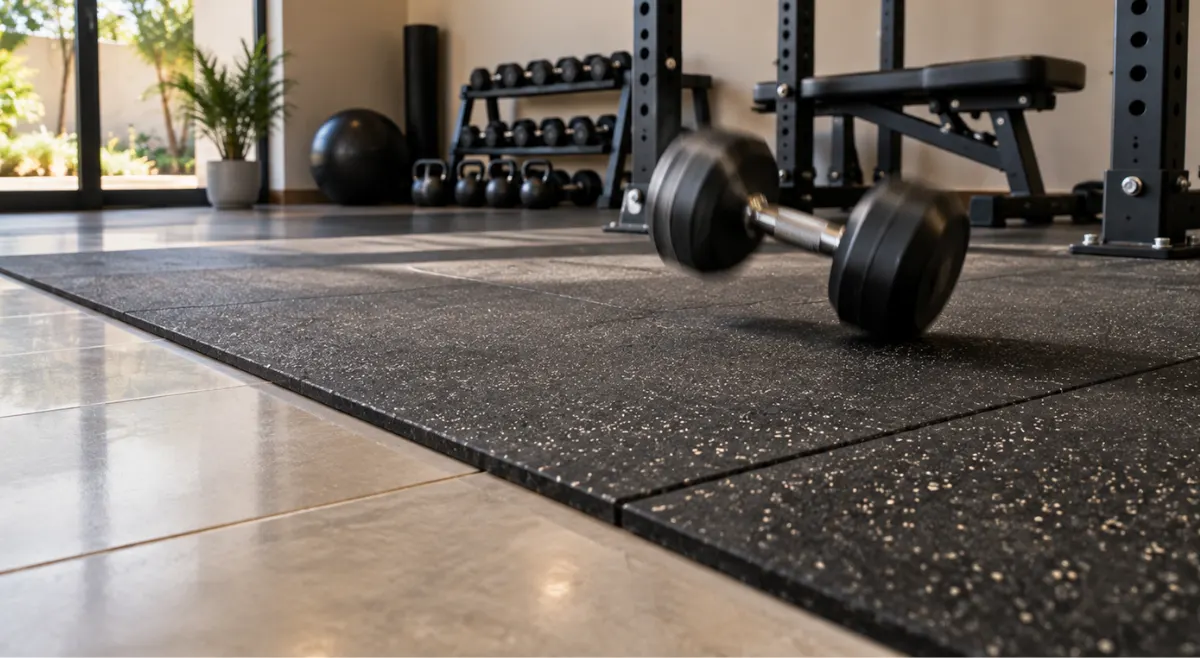
Home gym flooring takes a beating that most rooms never see. Dumbbells get dropped, kettlebells scrape across tile, and treadmill feet press into the same four spots for months at a time. In a Doha villa or apartment, where floors are usually porcelain tile, marble, or laminate, that kind of repeated stress can crack grout lines, dent softer surfaces, and leave scuff marks that are hard to remove.
The good news is that floor damage from weights and equipment is almost entirely preventable. It comes down to picking the right base material, adding the right layer of protection on top, and understanding how Doha’s heat and humidity affect whatever you install.
Why Are Qatar Homeowners Choosing SPC Flooring Qatar for Gym Rooms?
SPC flooring, short for Stone Plastic Composite, is built from limestone and stabilizers pressed into a dense, rigid core. That density is exactly what makes it useful for a room that takes a pounding. Where laminate can swell if moisture gets underneath it, SPC flooring is fully waterproof and holds its shape under sustained weight, which matters if a squat rack or power tower is going to sit in one spot for years.
It also resists warping in heat, a real concern in Qatar homes, where a garage or sunroom converted into a gym space can swing in temperature through the day. For anyone weighing up base materials for a dedicated workout room, browsing SPC and vinyl flooring options is a reasonable starting point before deciding what goes on top of it.
Building a Protective Layer Over Your Subfloor
A hard subfloor like SPC or porcelain tile is only half the equation. The second layer, usually a rubber or dense foam mat, is what actually absorbs impact when a weight plate hits the ground. As a general rule, lighter workouts involving machines or bodyweight movements need less cushioning, while free weights and any chance of a dropped barbell call for thicker matting underneath.
This is where testing standards matter more than marketing claims. Resilient flooring materials, including the vinyl and composite tiles used in many home gyms, are measured against recognized industry benchmarks for impact resistance, such as those maintained by ASTM International’s resilient floor covering standards. Knowing that a standard exists, rather than trusting a vague durability claim, gives homeowners a clearer way to compare options before buying.
Doha’s Climate and What It Does to Home Gym Flooring
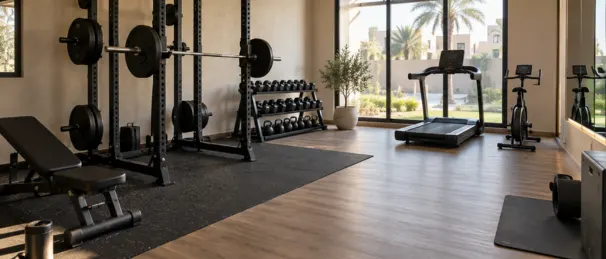
Heat and humidity change how home gym flooring behaves over time. Vinyl and laminate flooring can expand slightly in high heat, which is one reason installers leave expansion gaps around the edges of a room. Air conditioning swings, common in Qatar homes where a gym room might sit closer to an exterior wall, also dry out certain materials faster than interior rooms.
Waterproof, moisture-stable flooring handles this better than materials sensitive to humidity shifts. It’s also worth thinking about sweat and spilled water bottles, which happen in any home gym regardless of climate. A subfloor that shrugs off moisture removes one more variable from the maintenance list.
Practical Steps to Protect Existing Floors
For anyone not ready to replace flooring entirely, there are still ways to reduce damage. Interlocking rubber or foam tiles can sit directly on top of existing tile or laminate without adhesive, making them easy to remove later. Placing equipment mats under machines, rather than letting metal feet rest directly on the floor, prevents the small dents that build up over months.
Rotating equipment position occasionally also spreads out wear instead of concentrating it in one spot. None of these steps require major renovation, and most can be done in an afternoon.
Final Thoughts
Protecting a home gym floor in Qatar comes down to two decisions: what the subfloor is made of and what sits on top of it to absorb impact. Waterproof, dense materials like SPC flooring give you a base that won’t warp or crack under repeated stress, while a proper mat layer handles the actual shock of dropped weights..
What does your current setup look like, and is your subfloor built for the kind of training you’re doing on it?
FAQ
Rarely, and this is largely because of how dense the material is. SPC flooring is pressed from limestone and stabilizers rather than softer layers, so it resists denting and cracking far better than standard laminate. Adding a rubber mat on top reduces the risk even further for serious free weight training.
A thick rubber or foam mat placed directly under the rack legs is the simplest fix. It spreads the load across a wider area and absorbs vibration from lifts and occasional drops. Pairing that mat with a stable, waterproof subfloor gives you protection at both layers instead of relying on one.
Yes, in most cases. Interlocking mats or foam tiles can be laid directly over porcelain, marble, or laminate without glue or major prep work. This is often the fastest way to protect an existing floor while deciding whether a full flooring change makes sense later.
A closed garage in Doha can swing from air-conditioned cool to well over 40 degrees by mid-afternoon. Laminate and untreated wood expand and contract with that kind of shift, sometimes lifting at the seams within a year or two. SPC holds up better because its core stays dimensionally stable regardless of temperature, so gaps and cupping are far less likely.
A quick visual check every few months is usually enough for most home setups. Look for lifted edges, cracked grout near heavy equipment, or dents where machine feet sit. Catching small issues early is far easier than dealing with a section that needs full replacement.