
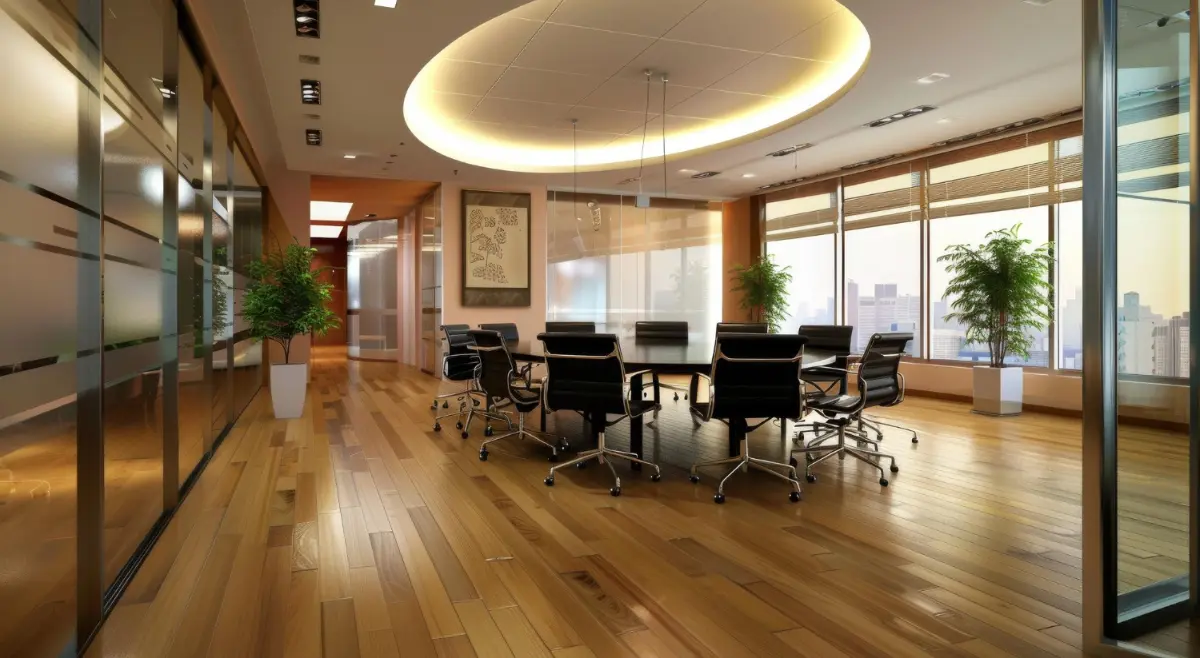
Commercial office flooring rarely works as a single material chosen for the whole building. A reception floor faces browsing visitors and rolling luggage, while a row of workstations deals with rolling chairs and eight hours of foot traffic a day. Doha’s climate adds another layer, since heat and tracked-in moisture settle into any porous surface near an entrance. Treating each zone on its own terms, rather than picking one floor and hoping it holds up everywhere, is what separates an office that still looks sharp in year five from one that needs a full redo.
Why Does Commercial Office Flooring Need Change by Zone?
An open floor plan and a private meeting room ask for different things of the same square footage. Foot traffic volume is the obvious variable. Moisture exposure, acoustic comfort, and how easily a damaged section gets repaired without shutting the whole floor matter just as much. A pantry sees spills most days. A boardroom sees polished shoes and the occasional dropped laptop bag.
Anam Trading has supplied office flooring in Qatar for more than a decade from its Doha base, and the pattern holds across nearly every fit-out. Buildings finished with a mix of materials by zone tend to need fewer full replacements than buildings covered in one product throughout. Matching the material to how a space actually gets used, not only to the budget line, is usually what decides how the floor performs five years later.
Reception and Client-Facing Entrances
First impressions and heavy footfall collide right at the front door, so reception areas need a surface that looks refined and shrugs off constant use. SPC flooring, a stone plastic composite built from limestone and stabilizers, tends to work well here because it resists water, does not warp in heat, and keeps its finish under rolling luggage or trolley wheels.
That waterproof quality matters during Doha’s short but heavy rain spells, when tracked-in moisture can damage a softer material within a season. For a lobby seeing dozens of visitors daily, a rigid, moisture-resistant floor generally outlasts softer alternatives, and it does so without the frequent resealing that some natural stone finishes need in a humid climate.
Open-Plan Workstations and Shared Desks
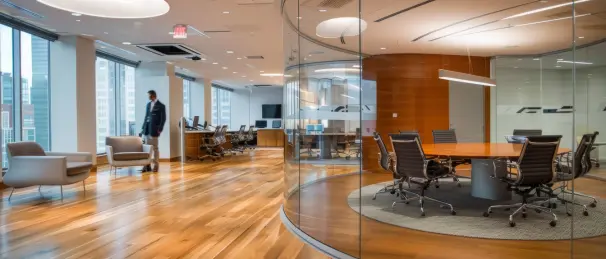
Open-plan floors carry a different kind of wear. Chair casters roll back and forth for hours, dropped pens and coffee happen daily, and noise travels fast across an uninterrupted surface. Carpet tiles address several of these problems at once. They soften footfall and voice noise more than a hard floor, and because they come in individual squares, a single stained or worn tile can be swapped without touching the rest of the floor.
Material choice also affects indoor air quality, a factor the International WELL Building Institute tracks through its restrictions on volatile organic compound emissions from interior products. For an office running air conditioning around the clock, lower-emission flooring in the main work area is a reasonable, low-cost precaution rather than an afterthought.
Executive Offices and Meeting Rooms
Private offices and boardrooms carry lighter foot traffic but higher visual expectations. Laminate parquet flooring gives these rooms the warmth of a wood finish without the price or the maintenance schedule of solid timber. It holds up to the wheels of an office chair better than many people expect, and the plank pattern reads as more considered than a uniform tile grid, which suits a room used for client meetings.
Because these spaces see fewer people per day than a reception or open floor, the trade-off of a slightly less rugged surface in exchange for a warmer, more finished look tends to make sense here in a way it would not near a building’s main entrance.
Break Rooms, Pantries, and Utility Corridors
Kitchens and utility corridors deal with water, spilled coffee, and dropped food on a near daily basis, so cost-effective moisture resistance matters more here than appearance. PVC and vinyl flooring suits this kind of space because it handles standing moisture without swelling and cleans up with a mop rather than specialist products. It also costs less per square meter than SPC or parquet, which is useful in back-of-house areas that visitors rarely see.
A textured or embossed finish in these zones reduces slip risk on wet floors, an easy detail to specify at the fit-out stage rather than retrofit later once staff start using the space.
Final Thoughts
Matching commercial office flooring to each work area is less about finding one perfect product and more about accepting that reception, desks, meeting rooms, and back-of-house spaces all wear differently. A fit-out that treats these zones separately from the design stage generally holds up better over years of daily use than one that tries to make a single material do every job.
Before the next renovation brief goes out, it might be worth asking which parts of the current floor are already showing their age and whether that wear tells you something about where the material choice went wrong the first time.
FAQ
SPC flooring is usually the safer bet for a reception. It handles rolling luggage, tracked-in rain, and daily foot traffic without warping, and it keeps a polished look longer than natural stone in Doha’s climate. If budget allows, pair it with a proper entrance mat to cut down on grit.
Yes, within reason. Carpet tiles are built for commercial use and hold up well under rolling chairs and daily walking. The real advantage shows up later, since a single worn or stained tile gets replaced on its own instead of forcing a full floor redo across the whole workstation area.
For a boardroom, absolutely. Laminate parquet sees far less traffic than a reception or open floor, so its wear resistance rarely becomes an issue. What it adds instead is a warmer, more finished look for client-facing rooms, which matters more in that space than raw durability does.
Vinyl or PVC flooring tends to win here because it shrugs off spilled coffee and standing water without swelling or staining. It also costs less than SPC or parquet, which makes sense in a back-of-house space that staff use daily but visitors rarely see.
One material can work for a small office, but larger fit-outs usually benefit from mixing types by zone. Moisture, traffic, and acoustic needs differ enough between a reception and a back office that a single floor often ends up compromising somewhere.